In The Newstag:www.catholicdemocrats.org,2021:/news//32021-01-18T16:31:31ZRelevant news for Catholic DemocratsMovable Type 3.31Catholic Inauguration Eventstag:www.catholicdemocrats.org,2021:/news//3.6242021-01-18T16:28:11Z2021-01-18T16:31:31ZA Catholic Evening of Reflection and Prayer: Healing, Accountability, Truth, and Hope January 19, 2021 at 8:00 p.m. Our prayer leaders include: Dr. Nichole Flores - University of Virginia Prof. Thomas Groome - Boston College Sr. Patricia McCann, RSM -...Patrick WhelanA Catholic Evening of Reflection and Prayer: Healing, Accountability, Truth, and Hope
January 19, 2021 at 8:00 p.m.
Our prayer leaders include:
Dr. Nichole Flores - University of Virginia
Prof. Thomas Groome - Boston College
Sr. Patricia McCann, RSM - Retired educator & social justice advocate
Fr. Bryan Massingale - Fordham University
Ms. Kate Williams - Music minister from the Archdiocese of Chicago
https://us02web.zoom.us/webinar/register/WN_DeqoKtlzTfqlZb8AxGjs7g
++++++++++++
An Inauguration Day Virtual Catholic Mass
January 20, 2021 at 9:00 a.m. EST.
Leading us in prayer and worship will be:
Fr. Thomas Reese, S.J.: Celebrant
Leslye Colvin: Lector, Isaiah 58: 6-11
Jeannie Gaffigan: Lector, Prayers of the Faithful
Kate Williams: Music Minister
https://us02web.zoom.us/webinar/register/WN_H0eLg3s9Ri6A09L-0ID0NA
]]>
Sr. Simone and Democrats praying for healing and unitytag:www.catholicdemocrats.org,2020:/news//3.6232020-11-04T09:02:58Z2020-11-04T09:07:57ZEvery single vote is sacred By Sr. Simone Campbell Last night I joined Oprah Winfrey and faith leaders from across the country on Zoom for a night of healing ahead of Election Day. For me, it was a sign of...Catholic Democrats Staff
Every single vote is sacred
By Sr. Simone Campbell
Last night I joined Oprah Winfrey and faith leaders from across the country on Zoom for a night of healing ahead of Election Day. For me, it was a sign of hope for our struggling democracy. In the face of immense odds during the pandemic, people across the nation have lived up to Pope Francis' "equally sacred"priorities, helping the most marginalized among us and making the world more just. Today, I am confident that work has continued in the ballot box.
In September and October, the Nuns on the Bus virtually traveled the nation, bringing together hundreds of people across the country, who are doing the most holy work of helping the most marginalized people among us. Tamer Malone with Black Leaders Organizing for Communities in Wisconsin, warned that "Because of this pandemic, a lot of people are out of a job. Kids are not in school, so now [parents are] going to have to manage either working from home and schooling their children at the same time or trying to find another job while schooling their children from home. Mental health is a big, big thing right now." Carina Jackson, the chief operations officer at Mariners Inn, acknowledged that "COVID is going to impact every area of our lives — income, health, [and] housing."
And in Michigan, we heard from Joan Ebbitt, the director of mental health counseling services at Siena Heights University, who explained that "we have lost the middle class. Everything is being squeezed and the poor get poorer and the 1% gets richer, I think that's a huge problem that's not going to change until we make some changes."
People like Joan, Carina and Tamar are doing such important work on behalf of the marginalized people all across the country. They understand how deeply the unemployed, those worried about losing their health care, or people grieving the loss of a loved one from COVID-19 are all hurting, and are desperate to have their voice heard in this election.
That's why yesterday, we worked with Nuns and Nones to organize over 500 Catholic sisters and allies to send letters to secretaries of state in Ohio, Pennsylvania, Michigan and Wisconsin that stress the importance of counting all votes and encouraging them to ensure a fair election. It's also why 30 Catholic sisters have traveled to poll sites in the Milwaukee and Detroit metropolitan areas with election defenders, ensuring everyone eligible is able to vote. Sisters are engaged in every way to ensure that everyone's vote is counted.
The pandemic and the economic crisis that has come with it reminds us that there are people all across this country who have felt unheard for too long. Every single vote is sacred and must be cast and counted in this election, and I'm going to do everything I can to make sure that happens. And then, after the election, we are all going to stay engaged and continue to listen to our people. We will embody Pope Francis's call in Fratelli Tutti to "be ready to listen to other points of view and to make room for everyone."
[Social Service Sister Simone Campbell is the Executive Director of Network Lobby for Catholic Social Justice and leader of Nuns on the Bus. She has led six cross-country Nuns on the Bus tours focused on tax justice, health care, immigration reform, voter turnout, and mending the gaps in income and wealth inequality.]]]>
Catholics for Biden powers uptag:www.catholicdemocrats.org,2020:/news//3.6222020-09-04T07:04:27Z2020-09-04T14:02:03ZIn a national conference call rolling out the Biden campaign's outreach to Catholics, speaker after speaker cited Vice President Biden's kindness and Catholic faith as reasons that Catholics would find in him a kindred spirit. A thousand people participated in...Patrick Whelan
Sr. Simone Campbell, the long crusading leader of Network, an issue-based social justice lobby for American sisters, talked about how essential Catholic voters are to Democratic success: "Catholics are a critical percentage of the voting public. We Catholics have got to make sure that we get it right. Care for the unborn is critically important....but it starts with making sure mothers get the care they need." She talked about the history of Republican Catholic outreach, and how "Our faith got high jacked and politicized." She joked that she was "trying to atone for my sins now by speaking up," suggesting that she wished she had spent more of her life as an activist. She made reference to a "Pope Francis scorecard" comparing the positions of different candidates with regard to the Catholic Social Justice tradition.
Several young Catholic leaders spoke on the call, including Felice Gorordo -- who heads eMerge Americas, and who served as an advisor in both the Bush and Obama administrations. He had worked with Vice President Biden on the administration's cancer initiative. Mara Smith, a graduate of the Jesuit Volunteer Core, talked about her Scranton connection with the Bidens and the ways that the Biden Campaign embodies Jesuit ideals.
Tim Shriver, chairman of the Special Olympics, also talked about JVC and the chance it gave him to meet people across the country. He said that Catholic outreach for the campaign would involve bringing in thousands of young people and fighting the "narrative that Catholics are old, and that young people are leaving the church."
Rep Thomas Suozzi, Democrat of New York, recalled the time conservative Harvard scholar Arthur Brooks spoke at a National Prayer Breakfast about our shared religious values and about the consensus we have about "loving your enemies." (He is the author of a book, "Love Your Enemies: How Decent People Can Save America from the Culture of Contempt.") Mr. Trump prefaced his subsequent remarks by saying, "Arthur, I do't know if I agree with you." He added, "Donald Trump's' America has no plan for the environment, for gun violence, for Covid-19."
All the speakers called on Catholics to bring their ideals to their friends and to the polls in November, and to turn back the destructive policies of the Trump years. The call ended in prayer, with a sense of determination to get out the word (and the Word).
]]>
tag:www.catholicdemocrats.org,2020:/news//3.6212020-04-05T20:05:29Z2020-04-05T20:05:41ZPatrick Whelan
]]>
Maeve & Gideon McKean: two wonderful souls close to our heartstag:www.catholicdemocrats.org,2020:/news//3.6202020-04-05T19:51:55Z2020-04-05T20:06:53ZKathleen Kennedy Townsend -- chair of the Institute for Human Virology at the University of Maryland, the former lieutenant governor of Maryland, and a board member of Catholic Democrats -- released the following reflection on the tragedy of her 42yo...Patrick Whelan
"With profound sadness, I share the news that the search for my beloved daughter Maeve and grandson Gideon has turned from rescue to recovery. Our Maeve devoted her life to helping society's most vulnerable. She was a Peace Corps Volunteer who pursued a career in law to give voice to the voiceless. She was Executive Director of the Georgetown University Global Health Initiative and taught bioethics and human rights as an adjunct professor, where she gave hope to those who need it most. Maeve served on the board of the Brady Campaign and Robert F. Kennedy Human Rights, where she honored the standard that we are all defined by the plight of those society leaves behind. She was a PTA president, a soccer star, and a marathon runner.
Maeve was vivid. You always knew when she was in a room. Her laughter was loud, unabashed, and infectious. She did everything with her full self and her whole heart. She gave the best hugs, sang loudly and out of tune, danced, wrestled, argued, forgave. Maeve shone. The fire emanating from her soul warmed us all. Her husband, David, and their children, Gideon, Gabriella, and Toby, were the great joys of her life. The role she treasured most was mom.
Gideon, like his mom, was a star athlete who loved soccer, golf, and running. He took after his parents in the most extraordinary ways. He loved riddles, math, chess, and adventures. He loved to invent new games with his mom and share them with us all. Gideon was a loving and protective big brother to Gabriella and Toby. And she was the most wonderful sister to Meaghan, Kat, and Kerry.
When my uncle Ted eulogized my father, he offered a prayer that what daddy was to his family, and what he wished for others, would someday come to pass for all the world. This is our prayer for Maeve and Gideon.
Our hearts are crushed, yet we shall try to summon the grace of God and what strength we have to honor the hope, energy and passion that Maeve and Gideon set forth into the world. My family thanks all for the outpouring of love and prayers as we grieve and try to bear this devastating loss."]]>
Hanukkah is not hypocrisy, argues Rabbi Michael Lernertag:www.catholicdemocrats.org,2018:/news//3.6192018-12-03T06:20:39Z2018-12-03T07:17:46ZOn the eve of Chanukah, Dec. 2nd, the N.Y. Times chose to publish an article entitled "The Hypocrisy of Hanukkah" by Michael David Lukas. It is worth exploring not only because of the way it reveal the shallowness of contemporary...Patrick Whelan
"The Hypocrisy of Hanukkah" by Michael David Lukas. It is worth exploring not only because of the way it reveal the shallowness of contemporary forms of Judaism that are more about identity than about belief and boiled down to please a mild form of liberalism, but also because of the way it reveals how ill suited contemporary liberalism is to understand the appeal of right-wing nationalist chauvinism and hence to effectively challenge it.
Lukas portrays the problem of contemporary non-religious Jews in face of the powerful and pervasive symbols of music of Christmas. Like most Jews, he doesn't believe in the supposed miracle of a light that burned for eight days, so he digs deeper and what he finds outrages him: that Chanukah was, in his representation, a battle between cosmopolitan Jews who wanted to embrace the enlightened thought of Greek culture and a militaristic chauvinistic fundamentalist force, the Maccabees. Since he is sure that those Maccabbees would reject him and his liberal ideas and politics, he is tempted to abandon the whole thing, but he decides not to do so because he needs something at this time of year to offer his young daughter who is attracted to Santa Claus, because he thinks that offering his daughter something he personally believes to be worse than nonsense is, as he puts, "it's all about beating Santa."
I want to sympathize with his plight but offer some very different perspectives.
Lukas proclaims proudly that he is part of the contemporary assimilationists so he wonders why he should celebrate a victory of the fundamentalists but that he wants to give his daughter a way to resist the pervasive Christian culture in which he is raising her. This should have given him a first clue: it turns out that indeed he is living in a culture which has put down and oppressed Jews for at least the past 1700 years since the teachings of the Jewish prophet Jesus were twisted into becoming the foundation for a Christian world that used religion to advance a colonialist and then imperialist culture which sought to dominate much of the world to the benefit of a small group of white men whose agenda was explicitly to maximize their wealth at everyone else’s expense. To refuse to bow down to the symbols of that culture, still imposed on everyone in this society, not by law but by the powerful impact of the culture and fitting neatly into the message that if you really care for your family or friends you will spend way beyond your means by buying material things that enrich the owners of the corporations. Lukas has become a victim of that culture, and only slightly alters it to participate in the idolatry of the marketplace by giving his consumption a new purpose: to make Chanukah into a pseudo Christmas, unwittingly undermining the potential liberation thrust of Chanukah.
To get to that liberation message, you have to understand that the religious fanaticism of the Maccabees was generated first and foremost by the oppressive policies of Greek imperialism (not Roman, which he mistakenly identifies as the enemy), and that like America and the West of the past several hundred years, its cultural and scientific strength were used to create a global culture which subordinated the independent farmers of Judeas and most of the other countries of the Mediterranean, teaching them that material rewards and physical prowess represented by the gymnasium and "perfect bodies" (which is why they criminalized the practice of circumcision) would be the best way to enforce their political and economic domination. The reason that rural farmers joined the Maccabean revolt was because the rule imposed first by Alexander "the Great" (conqueror and oppressor), forced them to give so much of their crops to the ruling Syria-baed Seleucid or Egypt-based Ptolemaic Hellenists (2 of the major societies that fought over control of Judea which lay between them) that these farmers were unable to adequately feed and provide sustenance to their families.
But why in Judea and not elsewhere in the Greek and subsequent Roman empires? Because the Jews had the teachings of their Torah that taught them that there was a force in the universe, Yud Hey Vav Hey, (mistranslated as Jehovah or Yahweh but actually meaning the force that makes possible the transformation of "that which is" into "that which can and should be") and that force had made it possible to get out of the slavery of Egypt and could again aid them to get out of this latest form of oppression. It was the belief in this force that led them to believe that the power of the ordinary people, once immersed in the enlightenment that this force gave them, that would be "greater than the man's technology' (to alter slightly the slogan of many liberation groups of the past and the present).
So instead of thinking that liberation lies with those Jews, past and present, who identify with the ruling powers of each historical period, whether that was the Jewish assimilationists of ancient Judaea or the Jared Kushners of our own time who cuddle up to President Trump and his bundle of liars and self-enriching imperialists, Chanukah teaches that there is another path: to utterly reject their system.
Now here comes the big problem: reject them for what alternative? The liberals and universalists of our time, like those of the Maccabean order, did not have a worldview that could include what was good and potentially soul-nourishing in the religious and spiritual cultures of the past. Similarly, the fundamentalists of our own time, Christian, Jewish, Islamic, Hindu, Buddhist, etc. are so deeply outraged at the oppressive role that the dominant global capitalist society and its culture have imposed on the world that they are unable to see the positive parts (e.g. the ideas of human rights and individual liberties, though those terms have mostly been used as a cover of legitimating systems and practices that these groups quite legitimately experience as oppressive).
The rabbis of the Talmud understood this dilemma. They did not want to legitimate the militarism, corruption, and violence of the Hashmonaim regimes that the Maccabees installed in place of Syrian Hellenistic rule, so they created the myth of the oil that burned for eight days and made that the miracle of Hanukkah. What they should have done is identify the real miracle: that people can unify against oppression and win against what at first seems like overwhelming odds against the forces that have all the conventional instruments of power in their hands, if and only if they can believe that there is something about the universe that makes such struggles winnable. Don't call it God if that term offends you, but develop some consciousness that there is something in the universe that makes liberation possible. That something is celebrated when in the darkest and (for many) scariest time of each year many of us light candles of Chanukah, or Christians light the candles celebrating their own version of that force in the birth of a baby who would become a liberator or savior. So instead of capitulating to the logic of the capitalist marketplace and trying to out-buy and out-shine our neighbors, we can embrace the possibility of possibility that Chanukah and Christmas both celebrate. There is nothing hypocritical about that, even if we do that celebration using the melodies and concepts of our own traditions to do so. We cannot beat the fundamentalists unless we have an alternative worldview which acknowledges what is right in their rejection of the dominant materialist cultures of supposedly enlightened societies, but still embraces the potentially liberatory (no it's not an official word, but it is my word) elements in Western cultures, manifested today in the struggles for human rights and support for refugees while opposing racism and sexism and homophobia and every other form of xenophobia, while purging out of Western societies their insane commitment to endless growth, accumulation of goods, and rejection of any higher meaning to life besides domination over others or the endless pursuit of "winning" and proving ourselves better than others while ignoring the damage we are doing to the earth.
---
Rabbi Michael Lerner is editor of Tikkun magazine the prophetic voice of Jews and all others who seek a fundamental healing and transformation of our world, and author of two national best seller, Jewish Renewal, and The Left Hand of God: Taking Back Our Country for the Religious Right.]]>
Humana Vitae and the coming Supreme Court debatetag:www.catholicdemocrats.org,2018:/news//3.6182018-07-26T19:41:38Z2018-07-26T19:48:51ZThis week marks the 50th anniversary of Humanae Vitae: On the Regulation of Birth, an encyclical signed by Pope Paul VI that re-affirmed the Catholic understanding of married love, its relation to parenthood, and his opposition to most artificial birth...Patrick Whelan
Deus Caritas Est, in which he acknowledged that the Church had not always taken a positive view of human sexuality: "Nowadays Christianity of the past is often criticized as having been opposed to the body; and it is quite true that tendencies of this sort have always existed." But he went on to refer to eros as a life experience that aspires to "authentic grandeur," and a source of "joy which is the Creator's gift (that) offers us a happiness which is itself a certain foretaste of the Divine." No longer is eros simply a means of procreation, but rather also a bond between married persons offering a window on God's love for humanity.
I believe it is now unreasonable to argue that opposition to effective contraception is a "pro-life" position. Data from the only prospective studies shows that effective contraception reliably prevents unintended pregnancy, and can result in substantially fewer abortions. Armed with knowledge that Paul VI did not have in 1968, and a view of human sexuality that has evolved even within the Church, our representatives will now debate the role of the law in addressing the abortion question through the confirmation process of a Supreme Court nominee. I hope they will contemplate the possibility that undoing the ACA and overturning Roe-vs-Wade could actually lead us down a path to reversing the decades-long progress in decreasing the number of abortions.
_______________
Patrick Whelan MD PhD is a pediatric specialist at UCLA and is on the Academic Advisory Board for the Institute for Advanced Catholic Studies at the University of Southern California.
]]>
Neil Gorsuch is Trump's pick for the Supreme Courttag:www.catholicdemocrats.org,2017:/news//3.6172017-02-01T01:40:44Z2017-02-01T01:46:23Zby Kimberly Winston, Religion News Service 1. Gorsuch, 49, is the son of Anne Gorsuch, President Ronald Reagan's administrator of the Environmental Protection Agency. Like his mother, Neil Gorsuch attended Catholic schools, in his case the Jesuit-run Georgetown Preparatory School...Catholic Democrats Staff
by Kimberly Winston, Religion News Service
1. Gorsuch, 49, is the son of Anne Gorsuch, President Ronald Reagan's administrator of the Environmental Protection Agency. Like his mother, Neil Gorsuch attended Catholic schools, in his case the Jesuit-run Georgetown Preparatory School in Washington, D.C. After college and law school at Columbia and Harvard respectively, Gorsuch clerked for Justice Anthony Kennedy, who is also Catholic.
2. Gorsuch has supported religious groups against the U.S. government. Two major religious liberty cases wound up before Denver's 10th Circuit Court of Appeals, where Gorsuch has served since 2006: The Little Sisters of the Poor v. Burwell and Hobby Lobby v. Burwell. In both cases, religious organizations -- a Catholic order of nuns and the evangelical owners of a craft store chain -- sought exemptions from providing birth control under the Affordable Care Act, or Obamacare. "All of us face the problem of complicity," he wrote in support of Hobby Lobby. Government should not force those with "sincerely held religious beliefs" to comply with "conduct their religion teaches them to be gravely wrong." The Supreme Court agreed in a 5-4 decision in 2014.
3. Gorsuch opposes euthanasia and assisted suicide, two positions that coincide with Catholic doctrine and the views of a majority of Christian denominations. Gorsuch wrote a book titled "The Future of Assisted Suicide and Euthanasia" that argued for maintaining laws against assisted suicide and euthanasia.
4. Gorsuch has not ruled in an abortion-related case. But he is lauded by many conservative religious people and groups who seek the overturning of Roe V. Wade because of how he wrote about the value of life in his book. "All human beings are intrinsically valuable and the intentional taking of human life by private persons is always wrong," he wrote. "The law ... doesn't just apply to protect popular religious beliefs: it does perhaps its most important work in protecting unpopular religious beliefs, vindicating this nation's long-held aspiration to serve as a refuge of religious tolerance."
5. Gorsuch reminds some people of Scalia, a conservative, an originalist whose decisions aligned with Catholic doctrine. University of Denver law professor Justin Marceau told The Denver Post that Gorsuch would be Scalia's "intellectual equal and almost certainly his equal on conservative jurisprudential approaches to criminal justice and social justice issues that are bound to keep coming up in the country."
Text of Secretary Hillary Clinton's post-election speechtag:www.catholicdemocrats.org,2016:/news//3.6162016-11-10T01:59:09Z2016-11-10T02:16:14ZThank you so very much for being here and I love you all, too. Last night, I congratulated Donald Trump and offered to work with him on behalf of our country. I hope that he will be a successful president...Patrick Whelan
But I feel pride and gratitude for this wonderful campaign that we built together, this vast, diverse, creative, unruly, energized campaign. You represent the best of America and being your candidate has been one of the greatest honors of my life.
(APPLAUSE)
I know how disappointed you feel because I feel it too, and so do tens of millions of Americans who invested their hopes and dreams in this effort. This is painful and it will be for a long time, but I want you to remember this. Our campaign was never about one person or even one election, it was about the country we love and about building an America that's hopeful, inclusive and big-hearted.
We have seen that our nation is more deeply divided than we thought. But I still believe in America and I always will. And if you do, then we must accept this result and then look to the future. Donald Trump is going to be our president. We owe him an open mind and the chance to lead.
Our constitutional democracy enshrines the peaceful transfer of power and we don't just respect that, we cherish it. It also enshrines other things; the rule of law, the principle that we are all equal in rights and dignity, freedom of worship and expression. We respect and cherish these values too and we must defend them.
(APPLAUSE)
Now, and let me add, our constitutional democracy demands our participation, not just every four years but all the time. So let's do all we can to keep advancing the causes and values we all hold dear; making our economy work for everyone not just those at the top, protecting our country and protecting our planet and breaking down all the barriers that hold any American back from achieving their dreams.
We've spent a year and a half bringing together millions of people from every corner of our country to say with one voice that we believe that the American dream is big enough for everyone -- for people of all races and religions, for men and women, for immigrants, for LGBT people, and people with disabilities. For everyone.
(APPLAUSE)
So now, our responsibility as citizens is to keep doing our part to build that better, stronger, fairer America we seek. And I know you will.
I am so grateful to stand with all of you. I want to thank Tim Kaine and Anne Holton for being our partners on this journey.
(APPLAUSE)
It has been a joy getting to know them better, and it gives me great hope and comfort to know that Tim will remain on the front lines of our democracy representing Virginia in the Senate.
(APPLAUSE)
To Barack and Michelle Obama, our country owes you an enormous debt of gratitude.
(APPLAUSE)
We thank you for your graceful, determined leadership that has meant so much to so many Americans and people across the world.
And to Bill and Chelsea, Mark, Charlotte, Aidan, our brothers and our entire family, my love for you means more than I can ever express. You crisscrossed this country on our behalf and lifted me up when I needed it most -- even four-month-old Aidan who traveled with his mom.
I will always be grateful to the creative, talented, dedicated men and women at our headquarters in Brooklyn and across our country.
(APPLAUSE)
You poured your hearts into this campaign. For some of you who are veterans, it was a campaign after you had done other campaigns. Some of you, it was your first campaign. I want each of you to know that you were the best campaign anybody could have ever expected or wanted.
(APPLAUSE)
And to the millions of volunteers, community leaders, activists and union organizers who knocked on doors, talked to neighbors, posted on Facebook, even in secret, private Facebook sites…
(LAUGHTER)
(APPLAUSE)
I want everybody coming out from behind that and make sure your voices are heard going forward.
(APPLAUSE)
To everyone who sent in contributions as small at $5 and kept us going, thank you. Thank you from all of us.
And to the young people in particular, I hope you will hear this. I have, as Tim said, spent my entire adult life fighting for what I believe in. I've had successes and I've had setbacks. Sometimes, really painful ones. Many of you are at the beginning of your professional public and political careers. You will have successes and setbacks, too.
This loss hurts, but please never stop believing that fighting for what's right is worth it.
(APPLAUSE)
CLINTON: It is -- it is worth it.
(APPLAUSE)
And so we need -- we need you to keep up these fights now and for the rest of your lives.
And to all the women, and especially the young women, who put their faith in this campaign and in me, I want you to know that nothing has made me prouder than to be your champion.
(APPLAUSE)
Now, I know we have still not shattered that highest and hardest glass ceiling, but some day someone will and hopefully sooner than we might think right now.
(APPLAUSE)
And to all the little girls who are watching this, never doubt that you are valuable and powerful and deserving of every chance and opportunity in the world to pursue and achieve your own dreams.
(APPLAUSE)
Finally, I am so grateful for our country and for all it has given to me. I count my blessings every single day that I am an American. And I still believe as deeply as I ever have that if we stand together and work together with respect for our differences, strength in our convictions and love for this nation, our best days are still ahead of us.
(APPLAUSE)
Because, you know, I believe we are stronger together and we will go forward together. And you should never, ever regret fighting for that. You know, scripture tells us, "Let us not grow weary in doing good, for in due season, we shall reap if we do not lose heart." (Galatians 6:9) So my friends, let us have faith in each other, let us not grow weary, let us not lose heart, for there are more seasons to come. And there is more work to do.
I am incredibly honored and grateful to have had this chance to represent all of you in this consequential election.
May God bless you and may God bless the United States of America.]]>
Text of President Obama's speech at the Democratic National Conventiontag:www.catholicdemocrats.org,2016:/news//3.6152016-07-28T05:48:47Z2016-07-28T07:11:57ZText of President Barack Obama's speech Wednesday at the Democratic National Convention, as provided by the White House. ___ Hello, America. Twelve years ago tonight, I addressed this convention for the very first time. You met my two little girls,...Patrick Whelan
I know the same can't be said for me. My girls remind me all the time. Wow, you've changed so much, daddy.
And it's true -- I was so young that first time in Boston. Maybe a little nervous addressing such a big crowd. But I was filled with faith; faith in America -- the generous, bighearted, hopeful country that made my story -- indeed, all of our stories -- possible.
A lot's happened over the years. And while this nation has been tested by war and recession and all manner of challenge -- I stand before you again tonight, after almost two terms as your President, to tell you I am even more optimistic about the future of America.
How could I not be -- after all we've achieved together?
After the worst recession in 80 years, we've fought our way back. We've seen deficits come down, 401(k)s recover, an auto industry set new records, unemployment reach eight-year lows, and our businesses create 15 million new jobs.
After a century of trying, we declared that health care in America is not a privilege for a few, but a right for everybody. After decades of talk, we finally began to wean ourselves off foreign oil, and doubled our production of clean energy.
We brought more of our troops home to their families, and delivered justice to Osama bin Laden. Through diplomacy, we shut down Iran's nuclear weapons program, opened up a new chapter with the people of Cuba, and brought nearly 200 nations together around a climate agreement that could save this planet for our kids.
We put policies in place to help students with loans; protect consumers from fraud; and cut veteran homelessness almost in half. And through countless acts of quiet courage, America learned that love has no limits, and marriage equality is now a reality across the land.
By so many measures, our country is stronger and more prosperous than it was when we started.
And through every victory and every setback, I've insisted that change is never easy, and never quick; that we wouldn't meet all of our challenges in one term, or one presidency, or even in one lifetime.
So tonight, I'm here to tell you that yes, we still have more work to do. More work to do for every American still in need of a good job or a raise, paid leave or a decent retirement; for every child who needs a sturdier ladder out of poverty or a world-class education; for everyone who hasn't yet felt the progress of these past seven and a half years. We need to keep making our streets safer and our criminal justice system fairer; our homeland more secure, and our world more peaceful and sustainable for the next generation. We're not done perfecting our union, or living up to our founding creed -- that all of us are created equal and free in the eyes of God.
That work involves a big choice this November. Fair to say, this is not your typical election. It's not just a choice between parties or policies; the usual debates between left and right. This is a more fundamental choice -- about who we are as a people, and whether we stay true to this great American experiment in self-government.
Look, we Democrats have always had plenty of differences with the Republican Party, and there's nothing wrong with that; it's precisely this contest of ideas that pushes our country forward.
But what we heard in Cleveland last week wasn't particularly Republican -- and it sure wasn't conservative. What we heard was a deeply pessimistic vision of a country where we turn against each other, and turn away from the rest of the world. There were no serious solutions to pressing problems -- just the fanning of resentment, and blame, and anger, and hate.
And that is not the America I know.
The America I know is full of courage, and optimism, and ingenuity. The America I know is decent and generous. Sure, we have real anxieties -- about paying the bills, protecting our kids, caring for a sick parent. We get frustrated with political gridlock, worry about racial divisions; are shocked and saddened by the madness of Orlando or Nice. There are pockets of America that never recovered from factory closures; men who took pride in hard work and providing for their families who now feel forgotten; parents who wonder whether their kids will have the same opportunities we had.
All that is real. We're challenged to do better; to be better. But as I’ve traveled this country, through all fifty states; as I’ve rejoiced with you and mourned with you, what I've also seen, more than anything, is what is right with America. I see people working hard and starting businesses; people teaching kids and serving our country. I see engineers inventing stuff, and doctors coming up with new cures. I see a younger generation full of energy and new ideas, not constrained by what is, ready to seize what ought to be.
Most of all, I see Americans of every party, every background, every faith who believe that we are stronger together -- black, white, Latino, Asian, Native American; young and old; gay, straight, men, women, folks with disabilities, all pledging allegiance, under the same proud flag, to this big, bold country that we love.
That's the America I know. And there is only one candidate in this race who believes in that future, and has devoted her life to it; a mother and grandmother who'd do anything to help our children thrive; a leader with real plans to break down barriers, blast through glass ceilings, and widen the circle of opportunity to every single American -- the next President of the United States, Hillary Clinton.
Now, eight years ago, Hillary and I were rivals for the Democratic nomination. We battled for a year and a half. Let me tell you, it was tough, because Hillary's tough. Every time I thought I might have that race won, Hillary just came back stronger.
But after it was all over, I asked Hillary to join my team. She was a little surprised, but ultimately said yes -- because she knew that what was at stake was bigger than either of us. And for four years, I had a front-row seat to her intelligence, her judgment, and her discipline. I came to realize that her unbelievable work ethic wasn’t for praise or attention -- that she was in this for everyone who needs a champion. I understood that after all these years, she has never forgotten just who she's fighting for.
Hillary's still got the tenacity she had as a young woman working at the Children's Defense Fund, going door to door to ultimately make sure kids with disabilities could get a quality education.
She's still got the heart she showed as our First Lady, working with Congress to help push through a Children's Health Insurance Program that to this day protects millions of kids.
She's still seared with the memory of every American she met who lost loved ones on 9/11, which is why, as a Senator from New York, she fought so hard for funding to help first responders; why, as Secretary of State, she sat with me in the Situation Room and forcefully argued in favor of the mission that took out bin Laden.
You know, nothing truly prepares you for the demands of the Oval Office. Until you've sat at that desk, you don't know what it's like to manage a global crisis, or send young people to war. But Hillary's been in the room; she's been part of those decisions. She knows what's at stake in the decisions our government makes for the working family, the senior citizen, the small business owner, the soldier, and the veteran. Even in the middle of crisis, she listens to people, and keeps her cool, and treats everybody with respect. And no matter how daunting the odds; no matter how much people try to knock her down, she never, ever quits.
That's the Hillary I know. That's the Hillary I've come to admire. And that's why I can say with confidence there has never been a man or a woman more qualified than Hillary Clinton to serve as President of the United States of America.
And, by the way, in case you were wondering about her judgment, look at her choice of running mate. Tim Kaine is as good a man, as humble and committed a public servant, as anyone I know. He will be a great Vice President, and he'll make Hillary a better President. Just like my dear friend and brother Joe Biden has made me a better President.
Now, Hillary has real plans to address the concerns she's heard from you on the campaign trail. She's got specific ideas to invest in new jobs, to help workers share in their company's profits, to help put kids in preschool, and put students through college without taking on a ton of debt. That's what leaders do.
And then there's Donald Trump. He's not really a plans guy. Not really a facts guy, either. He calls himself a business guy, which is true, but I have to say, I know plenty of businessmen and women who've achieved success without leaving a trail of lawsuits, and unpaid workers, and people feeling like they got cheated.
Does anyone really believe that a guy who's spent his 70 years on this Earth showing no regard for working people is suddenly going to be your champion? Your voice? If so, you should vote for him. But if you're someone who's truly concerned about paying your bills, and seeing the economy grow, and creating more opportunity for everybody, then the choice isn't even close. If you want someone with a lifelong track record of fighting for higher wages, better benefits, a fairer tax code, a bigger voice for workers, and stronger regulations on Wall Street, then you should vote for Hillary Clinton.
And if you're concerned about who's going to keep you and your family safe in a dangerous world -- well, the choice is even clearer. Hillary Clinton is respected around the world not just by leaders, but by the people they serve. She's worked closely with our intelligence teams, our diplomats, our military. And she has the judgment, the experience, and the temperament to meet the threat from terrorism. It's not new to her. Our troops have pounded ISIL without mercy, taking out leaders, taking back territory. I know Hillary won't relent until ISIL is destroyed. She'll finish the job -- and she'll do it without resorting to torture, or banning entire religions from entering our country. She is fit to be the next Commander-in-Chief.
Meanwhile, Donald Trump calls our military a disaster. Apparently, he doesn't know the men and women who make up the strongest fighting force the world has ever known. He suggests America is weak. He must not hear the billions of men, women, and children, from the Baltics to Burma, who still look to America to be the light of freedom, dignity, and human rights. He cozies up to Putin, praises Saddam Hussein, and tells the NATO allies that stood by our side after 9/11 that they have to pay up if they want our protection. Well, America's promises do not come with a price tag. We meet our commitments. And that's one reason why almost every country on Earth sees America as stronger and more respected today than they did eight years ago.
America is already great. America is already strong. And I promise you, our strength, our greatness, does not depend on Donald Trump.
In fact, it doesn't depend on any one person. And that, in the end, may be the biggest difference in this election -- the meaning of our democracy.
Ronald Reagan called America "a shining city on a hill." Donald Trump calls it "a divided crime scene" that only he can fix. It doesn't matter to him that illegal immigration and the crime rate are as low as they've been in decades, because he's not offering any real solutions to those issues. He's just offering slogans, and he's offering fear. He's betting that if he scares enough people, he might score just enough votes to win this election.
That is another bet that Donald Trump will lose. Because he's selling the American people short. We are not a fragile or frightful people. Our power doesn't come from some self-declared savior promising that he alone can restore order. We don't look to be ruled. Our power comes from those immortal declarations first put to paper right here in Philadelphia all those years ago; We hold these truths to be self-evident, that all men are created equal; that together, We, the People, can form a more perfect union.
That's who we are. That's our birthright -- the capacity to shape our own destiny. That's what drove patriots to choose revolution over tyranny and our GIs to liberate a continent. It's what gave women the courage to reach for the ballot, and marchers to cross a bridge in Selma, and workers to organize and fight for better wages.
America has never been about what one person says he'll do for us. It's always been about what can be achieved by us, together, through the hard, slow, sometimes frustrating, but ultimately enduring work of self-government.
And that's what Hillary Clinton understands. She knows that this is a big, diverse country, and that most issues are rarely black and white. That even when you're 100 percent right, getting things done requires compromise. That democracy doesn't work if we constantly demonize each other. She knows that for progress to happen, we have to listen to each other, see ourselves in each other, fight for our principles but also fight to find common ground, no matter how elusive that may seem.
Hillary knows we can work through racial divides in this country when we realize the worry black parents feel when their son leaves the house isn't so different than what a brave cop's family feels when he puts on the blue and goes to work; that we can honor police and treat every community fairly. She knows that acknowledging problems that have festered for decades isn't making race relations worse -- it's creating the possibility for people of good will to join and make things better.
Hillary knows we can insist on a lawful and orderly immigration system while still seeing striving students and their toiling parents as loving families, not criminals or rapists; families that came here for the same reasons our forebears came -- to work, and study, and make a better life, in a place where we can talk and worship and love as we please. She knows their dream is quintessentially American, and the American Dream is something no wall will ever contain.
It can be frustrating, this business of democracy. Trust me, I know. Hillary knows, too. When the other side refuses to compromise, progress can stall. Supporters can grow impatient, and worry that you're not trying hard enough; that you've maybe sold out.
But I promise you, when we keep at it; when we change enough minds; when we deliver enough votes, then progress does happen. Just ask the twenty million more people who have health care today. Just ask the Marine who proudly serves his country without hiding the husband he loves. Democracy works, but we gotta want it - not just during an election year, but all the days in between.
So if you agree that there's too much inequality in our economy, and too much money in our politics, we all need to be as vocal and as organized and as persistent as Bernie Sanders' supporters have been. We all need to get out and vote for Democrats up and down the ticket, and then hold them accountable until they get the job done.
If you want more justice in the justice system, then we've all got to vote -- not just for a President, but for mayors, and sheriffs, and state's attorneys, and state legislators. And we've got to work with police and protesters until laws and practices are changed.
If you want to fight climate change, we've got to engage not only young people on college campuses, but reach out to the coal miner who's worried about taking care of his family, the single mom worried about gas prices.
If you want to protect our kids and our cops from gun violence, we've got to get the vast majority of Americans, including gun owners, who agree on background checks to be just as vocal and determined as the gun lobby that blocks change through every funeral we hold. That's how change will happen.
Look, Hillary's got her share of critics. She's been caricatured by the right and by some folks on the left; accused of everything you can imagine -- and some things you can't. But she knows that's what happens when you're under a microscope for 40 years. She knows she's made mistakes, just like I have; just like we all do. That's what happens when we try. That's what happens when you're the kind of citizen Teddy Roosevelt once described -- not the timid souls who criticize from the sidelines, but someone "who is actually in the arena.who strives valiantly; who errs.(but) who at the best knows in the end the triumph of high achievement."
Hillary Clinton is that woman in the arena. She's been there for us -- even if we haven't always noticed. And if you're serious about our democracy, you can't afford to stay home just because she might not align with you on every issue. You've got to get in the arena with her, because democracy isn't a spectator sport. America isn't about "yes he will." It's about "yes we can." And we're going to carry Hillary to victory this fall, because that's what the moment demands.
You know, there's been a lot of talk in this campaign about what America's lost -- people who tell us that our way of life is being undermined by pernicious changes and dark forces beyond our control. They tell voters there's a "real America" out there that must be restored. This isn't an idea that started with Donald Trump. It's been peddled by politicians for a long time -- probably from the start of our Republic.
And it's got me thinking about the story I told you twelve years ago tonight, about my Kansas grandparents and the things they taught me when I was growing up. They came from the heartland; their ancestors began settling there about 200 years ago. They were Scotch-Irish mostly, farmers, teachers, ranch hands, pharmacists, oil rig workers. Hardy, small town folks. Some were Democrats, but a lot of them were Republicans. My grandparents explained that they didn't like show-offs. They didn't admire braggarts or bullies. They didn't respect mean-spiritedness, or folks who were always looking for shortcuts in life. Instead, they valued traits like honesty and hard work. Kindness and courtesy. Humility; responsibility; helping each other out.
That's what they believed in. True things. Things that last. The things we try to teach our kids.
And what my grandparents understood was that these values weren't limited to Kansas. They weren't limited to small towns. These values could travel to Hawaii; even the other side of the world, where my mother would end up working to help poor women get a better life. They knew these values weren't reserved for one race; they could be passed down to a half-Kenyan grandson, or a half-Asian granddaughter; in fact, they were the same values Michelle's parents, the descendants of slaves, taught their own kids living in a bungalow on the South Side of Chicago. They knew these values were exactly what drew immigrants here, and they believed that the children of those immigrants were just as American as their own, whether they wore a cowboy hat or a yarmulke; a baseball cap or a hijab.
America has changed over the years. But these values my grandparents taught me -- they haven't gone anywhere. They're as strong as ever; still cherished by people of every party, every race, and every faith. They live on in each of us. What makes us American, what makes us patriots, is what's in here. That's what matters. That's why we can take the food and music and holidays and styles of other countries, and blend it into something uniquely our own. That's why we can attract strivers and entrepreneurs from around the globe to build new factories and create new industries here. That's why our military can look the way it does, every shade of humanity, forged into common service. That's why anyone who threatens our values, whether fascists or communists or jihadists or homegrown demagogues, will always fail in the end.
That's America. Those bonds of affection; that common creed. We don't fear the future; we shape it, embrace it, as one people, stronger together than we are on our own. That's what Hillary Clinton understands -- this fighter, this stateswoman, this mother and grandmother, this public servant, this patriot -- that's the America she's fighting for.
And that's why I have confidence, as I leave this stage tonight, that the Democratic Party is in good hands. My time in this office hasn't fixed everything; as much as we've done, there's still so much I want to do. But for all the tough lessons I've had to learn; for all the places I've fallen short; I've told Hillary, and I'll tell you what's picked me back up, every single time.
It's been you. The American people.
It's the letter I keep on my wall from a survivor in Ohio who twice almost lost everything to cancer, but urged me to keep fighting for health care reform, even when the battle seemed lost. Do not quit.
It's the painting I keep in my private office, a big-eyed, green owl, made by a seven year-old girl who was taken from us in Newtown, given to me by her parents so I wouldn't forget -- a reminder of all the parents who have turned their grief into action.
It's the small business owner in Colorado who cut most of his own salary so he wouldn't have to lay off any of his workers in the recession -- because, he said, "that wouldn't have been in the spirit of America."
It's the conservative in Texas who said he disagreed with me on everything, but appreciated that, like him, I try to be a good dad.
It's the courage of the young soldier from Arizona who nearly died on the battlefield in Afghanistan, but who's learned to speak and walk again -- and earlier this year, stepped through the door of the Oval Office on his own power, to salute and shake my hand.
It's every American who believed we could change this country for the better, so many of you who'd never been involved in politics, who picked up phones, and hit the streets, and used the internet in amazing new ways to make change happen. You are the best organizers on the planet, and I'm so proud of all the change you've made possible.
Time and again, you've picked me up. I hope, sometimes, I picked you up, too. Tonight, I ask you to do for Hillary Clinton what you did for me. I ask you to carry her the same way you carried me. Because you're who I was talking about twelve years ago, when I talked about hope -- it's been you who've fueled my dogged faith in our future, even when the odds are great; even when the road is long. Hope in the face of difficulty; hope in the face of uncertainty; the audacity of hope!
America, you have vindicated that hope these past eight years. And now I'm ready to pass the baton and do my part as a private citizen. This year, in this election, I'm asking you to join me -- to reject cynicism, reject fear, to summon what's best in us; to elect Hillary Clinton as the next President of the United States, and show the world we still believe in the promise of this great nation.
Thank you for this incredible journey. Let's keep it going. God bless the United States of America.]]>
Fr. Charles McCarthy and a Christian perspective on the box office hit, "American Sniper"tag:www.catholicdemocrats.org,2015:/news//3.6142015-02-03T17:23:56Z2015-02-05T12:57:01ZA Fox TV News talking-head, who also has his own Fox radio show, and therefore reaches millions of people with his presentation of reality and Gospel "truth," Todd Starnes, an Evangelical Christian, said last week that Jesus Christ would have...Patrick Whelan
"You've gotta love" those American Evangelicals. They call the shots as they are. They don't pussy foot around morally and theologically when it comes to war. Unlike their Catholic, Protestant and Orthodox co-religionists, they do not incessantly dabble in ethical hair-splitting rooted in the esoterica of metaphysics and mysticism in order to twist Jesus' command, "Love your enemies," into meaning that a Christian is loving his or her enemies when in reality he or she is destroying and mutilating them and those they love. The Evangelical knows what war is. They know what really goes on in war. They know the spirit of lethal enmity in which war has to be waged by the men and women who actually do the fighting, killing and dying--if they are going to successfully do the job that they think the President of the U.S. sent them to do. (They will never know the real reason behind the President sending them to kill and maim people in some place far from the United States) They are Christians. They have the true faith. They are the true believers of the true faith. Anyone else is just Godless, without God. And, if the Godless ever dare oppose the United States, which is "under God" and is a place "with liberty and justice for all," then they have no right to exist-- because only truth has a right to exist; then they have no right to exist because by being enemies of this Christian nation they ipso facto are enemies of its God.
In this 70% "Christian" nation--on paper--the populace recently has been drawn to see the film American Sniper, like flies are drawn to flypaper. It is a box office palooza. It is unlikely that many, if any, Bishops will have much to say that is negative about it, if they dare say anything. Silence in the face of the human slaughter and destruction that their government's wars demand, and that members of their Churches are executing, has always been the Bishops' strong suit and cornerstone on which they have built their pleasant and lucrative relationship with the government. Silent acquiescence, while Christians in their spiritual care dash head long into the spiritual flypaper of American Sniper, would be normal for them. Where anything related to homicide by the U.S Military is involved, regardless of the level of human desolation it brings down on men, women and children, civilian or military, in utero or extra utero, today or tomorrow, "Mum's the word." So there is no reason to anticipate that the U.S. Bishops will even warn Christians that this multi-million dollar film is a multi-sensual cinematic deception intended to brainwash people into putting on the mind of Cain, which is as far removed from the mind of Jesus as hell is from heaven. Indeed, this film's infernal cunningness lay in the fact that it can lead Christians ever more deeply to believe that the mind of Cain is the mind of Christ.
In my judgement it would be a near occasion of sin for young people whose brains are not fully developed to view this murderous piece of propaganda. At a bare minimum, a warning of the film's potential to morally corrupt young people and those adults with certain mental disorders should be issued by every bishop to the people of the diocese. Any bishop who would do that would have neuroscience, common sense and the Gospels to thoroughly back-up what was said. ]]>
A story of American bombers and the Catholic cathedral they destroyedtag:www.catholicdemocrats.org,2014:/news//3.6132014-08-31T14:48:37Z2014-08-31T16:33:45Z69 years ago, the world's first plutonium bomb was dropped on Nagasaki, which had for 400 years been the home of Japanese Christianity. From the arrival of Portuguese missionaries in the 1550s until the 1860s, a culture of quiet Christianity...Catholic Democrats Staff
Read more at http://www.catholicdemocrats.org/NagasakiReflection.pdfThe city of Nagasaki, the morning of August 9 before American bombers arrived.]]>
Sermon of Pope Francis, at the canonization of St. John XXIII and St. John Paul IItag:www.catholicdemocrats.org,2014:/news//3.6122014-04-27T23:38:45Z2014-04-28T01:53:47ZAt the heart of this Sunday, which concludes the Octave of Easter and which John Paul II wished to dedicate to Divine Mercy, are the glorious wounds of the risen Jesus. He had already shown those wounds when he first...Catholic Democrats Staff
A week later, Jesus appeared once more to the disciples gathered in the Upper Room, and Thomas was present; Jesus turned to him and told him to touch his wounds. Whereupon that man, so straightforward and accustomed to testing everything personally, knelt before Jesus with the words: "My Lord and my God!"
The wounds of Jesus are a scandal, a stumbling block for faith, yet they are also the test of faith. That is why on the body of the risen Christ the wounds never pass away: they remain, for those wounds are the enduring sign of God's love for us. They are essential for believing in God. Not for believing that God exists, but for believing that God is love, mercy and faithfulness. Saint Peter, quoting Isaiah, writes to Christians: "by his wounds you have been healed."
Saint John XXIII and Saint John Paul II were not afraid to look upon the wounds of Jesus, to touch his torn hands and his pierced side. They were not ashamed of the flesh of Christ, they were not scandalized by him, by his cross; they did not despise the flesh of their brother because they saw Jesus in every person who suffers and struggles.
These were two men of courage, filled with the parrhesia of the Holy Spirit, and they bore witness before the Church and the world to God's goodness and mercy.
They were priests, bishops and popes of the twentieth century. They lived through the tragic events of that century, but they were not overwhelmed by them. For them, God was more powerful; faith was more powerful -- faith in Jesus Christ the Redeemer of man and the Lord of history; the mercy of God, shown by those five wounds, was more powerful; and more powerful too was the closeness of Mary our Mother.
In these two men, who looked upon the wounds of Christ and bore witness to his mercy, there dwelt a living hope and an indescribable and glorious joy. The hope and the joy which the risen Christ bestows on his disciples, the hope and the joy which nothing and no one can take from them. The hope and joy of Easter, forged in the crucible of self-denial, self-emptying, utter identification with sinners, even to the point of disgust at the bitterness of that chalice.
Such were the hope and the joy which these two holy popes had received as a gift from the risen Lord and which they in turn bestowed in abundance upon the People of God, meriting our eternal gratitude.
This hope and this joy were palpable in the earliest community of believers, in Jerusalem, as we read in the Acts of the Apostles, as we heard in the second reading. It was a community which lived the heart of the Gospel, love and mercy, in simplicity and fraternity.
This is also the image of the Church which the Second Vatican Council set before us. John XXIII and John Paul II cooperated with the Holy Spirit in renewing and updating the Church in keeping with her pristine features, those features which the saints have given her throughout the centuries.
Let us not forget that it is the saints who give direction and growth to the Church. In convening the Council, John XXIII showed an exquisite openness to the Holy Spirit. He let himself be led and he was for the Church a pastor, a servant-leader, led by the Spirit. This was his great service to the Church; he was the pope of openness to the Spirit.
In his own service to the People of God, John Paul II was the pope of the family. He himself once said that he wanted to be remembered as the pope of the family. I am particularly happy to point this out as we are in the process of journeying with families towards the Synod on the Family. It is surely a journey which, from his place in heaven, he guides and sustains.
May these two new saints and shepherds of God's people intercede for the Church, so that during this two-year journey toward the Synod she may be open to the Holy Spirit in pastoral service to the family. May both of them teach us not to be scandalized by the wounds of Christ and to enter ever more deeply into the mystery of divine mercy, which always hopes and always forgives, because it always loves.]]>
HOMILY OF THE HOLY FATHER POPE FRANCIStag:www.catholicdemocrats.org,2013:/news//3.6112013-03-19T17:17:17Z2013-03-19T21:14:36ZSaint Peter's Square Tuesday, 19 March 2013 Solemnity of Saint Joseph Dear Brothers and Sisters, I thank the Lord that I can celebrate this Holy Mass for the inauguration of my Petrine ministry on the solemnity of Saint Joseph, the...Catholic Democrats Staff
I offer a warm greeting to my brother cardinals and bishops, the priests, deacons, men and women religious, and all the lay faithful. I thank the representatives of the other Churches and ecclesial Communities, as well as the representatives of the Jewish community and the other religious communities, for their presence. My cordial greetings go to the Heads of State and Government, the members of the official Delegations from many countries throughout the world, and the Diplomatic Corps.
In the Gospel we heard that "Joseph did as the angel of the Lord commanded him and took Mary as his wife" (Mt 1:24). These words already point to the mission which God entrusts to Joseph: he is to be the custos, the protector. The protector of whom? Of Mary and Jesus; but this protection is then extended to the Church, as Blessed John Paul II pointed out: "Just as Saint Joseph took loving care of Mary and gladly dedicated himself to Jesus Christ's upbringing, he likewise watches over and protects Christ's Mystical Body, the Church, of which the Virgin Mary is the exemplar and model" (Redemptoris Custos, 1).
How does Joseph exercise his role as protector? Discreetly, humbly and silently, but with an unfailing presence and utter fidelity, even when he finds it hard to understand. From the time of his betrothal to Mary until the finding of the twelve-year-old Jesus in the Temple of Jerusalem, he is there at every moment with loving care. As the spouse of Mary, he is at her side in good times and bad, on the journey to Bethlehem for the census and in the anxious and joyful hours when she gave birth; amid the drama of the flight into Egypt and during the frantic search for their child in the Temple; and later in the day-to-day life of the home of Nazareth, in the workshop where he taught his trade to Jesus.
How does Joseph respond to his calling to be the protector of Mary, Jesus and the Church? By being constantly attentive to God, open to the signs of God's presence and receptive to God's plans, and not simply to his own. This is what God asked of David, as we heard in the first reading. God does not want a house built by men, but faithfulness to his word, to his plan. It is God himself who builds the house, but from living stones sealed by his Spirit. Joseph is a "protector" because he is able to hear God's voice and be guided by his will; and for this reason he is all the more sensitive to the persons entrusted to his safekeeping. He can look at things realistically, he is in touch with his surroundings, he can make truly wise decisions. In him, dear friends, we learn how to respond to God's call, readily and willingly, but we also see the core of the Christian vocation, which is Christ! Let us protect Christ in our lives, so that we can protect others, so that we can protect creation!
The vocation of being a "protector," however, is not just something involving us Christians alone; it also has a prior dimension which is simply human, involving everyone. It means protecting all creation, the beauty of the created world, as the Book of Genesis tells us and as Saint Francis of Assisi showed us. It means respecting each of God's creatures and respecting the environment in which we live. It means protecting people, showing loving concern for each and every person, especially children, the elderly, those in need, who are often the last we think about. It means caring for one another in our families: husbands and wives first protect one another, and then, as parents, they care for their children, and children themselves, in time, protect their parents. It means building sincere friendships in which we protect one another in trust, respect, and goodness. In the end, everything has been entrusted to our protection, and all of us are responsible for it. Be protectors of God's gifts!
Whenever human beings fail to live up to this responsibility, whenever we fail to care for creation and for our brothers and sisters, the way is opened to destruction and hearts are hardened. Tragically, in every period of history there are "Herods" who plot death, wreak havoc, and mar the countenance of men and women.
Please, I would like to ask all those who have positions of responsibility in economic, political and social life, and all men and women of goodwill: let us be "protectors" of creation, protectors of God's plan inscribed in nature, protectors of one another and of the environment. Let us not allow omens of destruction and death to accompany the advance of this world! But to be "protectors," we also have to keep watch over ourselves! Let us not forget that hatred, envy and pride defile our lives! Being protectors, then, also means keeping watch over our emotions, over our hearts, because they are the seat of good and evil intentions: intentions that build up and tear down! We must not be afraid of goodness or even tenderness!
Here I would add one more thing: caring, protecting, demands goodness, it calls for a certain tenderness. In the Gospels, Saint Joseph appears as a strong and courageous man, a working man, yet in his heart we see great tenderness, which is not the virtue of the weak but rather a sign of strength of spirit and a capacity for concern, for compassion, for genuine openness to others, for love. We must not be afraid of goodness, of tenderness!
Today, together with the feast of Saint Joseph, we are celebrating the beginning of the ministry of the new Bishop of Rome, the Successor of Peter, which also involves a certain power. Certainly, Jesus Christ conferred power upon Peter, but what sort of power was it? Jesus' three questions to Peter about love are followed by three commands: feed my lambs, feed my sheep. Let us never forget that authentic power is service, and that the Pope too, when exercising power, must enter ever more fully into that service which has its radiant culmination on the Cross. He must be inspired by the lowly, concrete and faithful service which marked Saint Joseph and, like him, he must open his arms to protect all of God's people and embrace with tender affection the whole of humanity, especially the poorest, the weakest, the least important, those whom Matthew lists in the final judgment on love: the hungry, the thirsty, the stranger, the naked, the sick and those in prison (cf. Mt 25:31-46). Only those who serve with love are able to protect!
In the second reading, Saint Paul speaks of Abraham, who, "hoping against hope, believed" (Rom 4:18). Hoping against hope! Today too, amid so much darkness, we need to see the light of hope and to be men and women who bring hope to others. To protect creation, to protect every man and every woman, to look upon them with tenderness and love, is to open up a horizon of hope; it is to let a shaft of light break through the heavy clouds; it is to bring the warmth of hope! For believers, for us Christians, like Abraham, like Saint Joseph, the hope that we bring is set against the horizon of God, which has opened up before us in Christ. It is a hope built on the rock which is God.
To protect Jesus with Mary, to protect the whole of creation, to protect each person, especially the poorest, to protect ourselves: this is a service that the Bishop of Rome is called to carry out, yet one to which all of us are called, so that the star of hope will shine brightly. Let us protect with love all that God has given us!
I implore the intercession of the Virgin Mary, Saint Joseph, Saints Peter and Paul, and Saint Francis, that the Holy Spirit may accompany my ministry, and I ask all of you to pray for me! Amen.]]>
White House Statement on Pope Francistag:www.catholicdemocrats.org,2013:/news//3.6102013-03-13T22:19:20Z2013-03-14T02:58:11ZThe White House released the following statement from President Obama on the new pope: On behalf of the American people, Michelle and I offer our warm wishes to His Holiness Pope Francis as he ascends to the Chair of Saint...Catholic Democrats Staff
The White House released the following statement from President Obama on the new pope:
On behalf of the American people, Michelle and I offer our warm wishes to His Holiness Pope Francis as he ascends to the Chair of Saint Peter and begins his papacy. As a champion of the poor and the most vulnerable among us, he carries forth the message of love and compassion that has inspired the world for more than two thousand years--that in each other we see the face of God.
As the first pope from the Americas, his selection also speaks to the strength and vitality of a region that is increasingly shaping our world, and alongside millions of Hispanic Americans, those of us in the United States share the joy of this historic day. Just as I appreciated our work with Pope Benedict XVI, I look forward to working with His Holiness to advance peace, security and dignity for our fellow human beings, regardless of their faith. We join with people around the world in offering our prayers for the Holy Father as he begins the sacred work of leading the Catholic Church in our modern world.
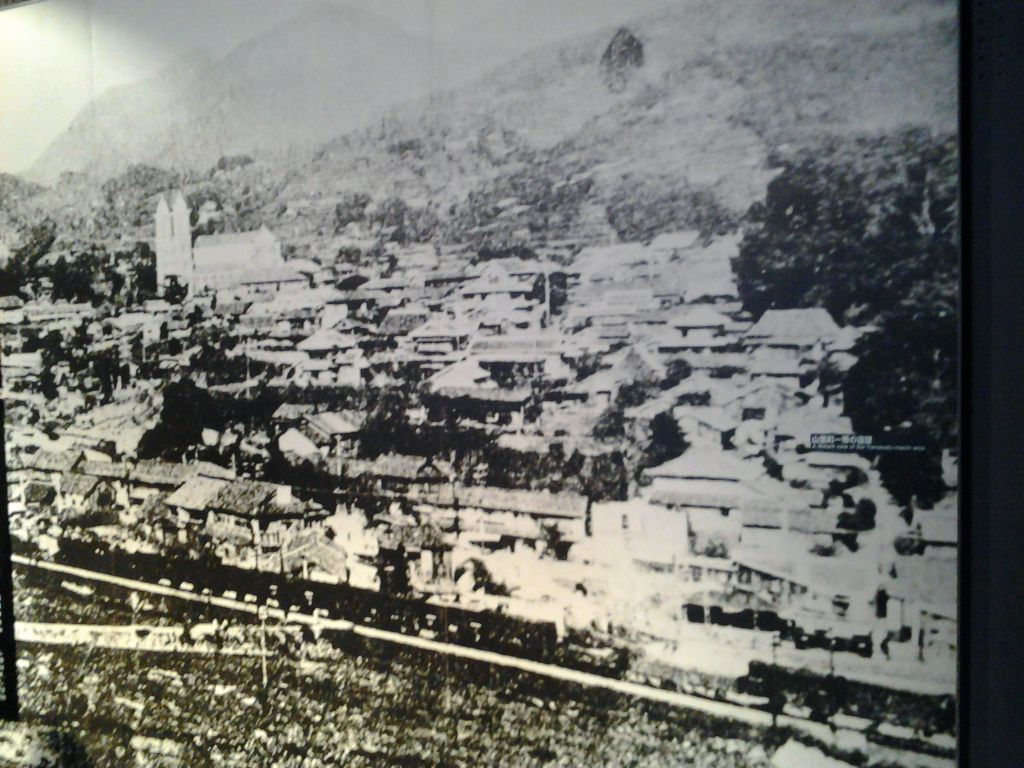 The city of Nagasaki, the morning of August 9 before American bombers arrived.]]>